
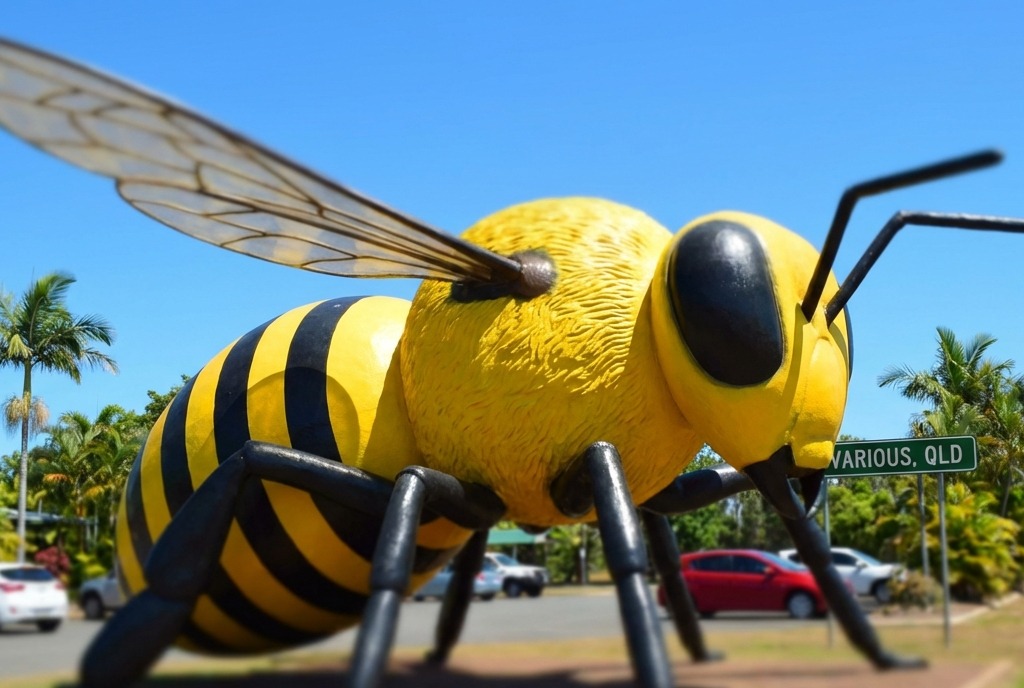
The Big Bee
Height
2-3 meters
Year Built
2000
Address
Various honey farm and tourist locations
The Lowdown
The Big Bee buzzes into the hearts of visitors, celebrating Australia's vital beekeeping industry and the incredible insects that pollinate one-third of our food crops. These oversized honeybee sculptures appear at various locations connected to apiculture, from honey farms to roadside stops. With their characteristic striped bodies, delicate wings, and fuzzy appearance rendered at enormous scale, Big Bees remind us of the essential role these tiny creatures play in our ecosystem. From the eucalyptus forests of Tasmania to the mangrove flowers of Queensland, Australian bees produce distinctive honeys while performing their crucial pollination duties.
Did you know?
"A bee colony can contain up to 60,000 bees"
History
Big Bee sculptures have been installed at honey farms and tourist locations to celebrate Australia's beekeeping industry and raise awareness about the importance of bees to our food system. They serve as both attractions and educational tools.
More Fun Facts
- •Bees pollinate one-third of the food we eat
- •A single bee produces just 1/12 teaspoon of honey in its lifetime
- •Australian bees are mostly disease-free compared to other countries
- •Tasmanian leatherwood honey is prized worldwide
- •A bee colony can contain up to 60,000 bees
Visiting Tips
- 💡Try different Australian honey varieties
- 💡Learn about beekeeping at working honey farms
- 💡Buy local honey to support beekeepers
- 💡Manuka and leatherwood honeys are Australian specialties
- 💡Plant bee-friendly flowers in your garden
Opening Hours
Check specific location for hours.
More Big Things Nearby
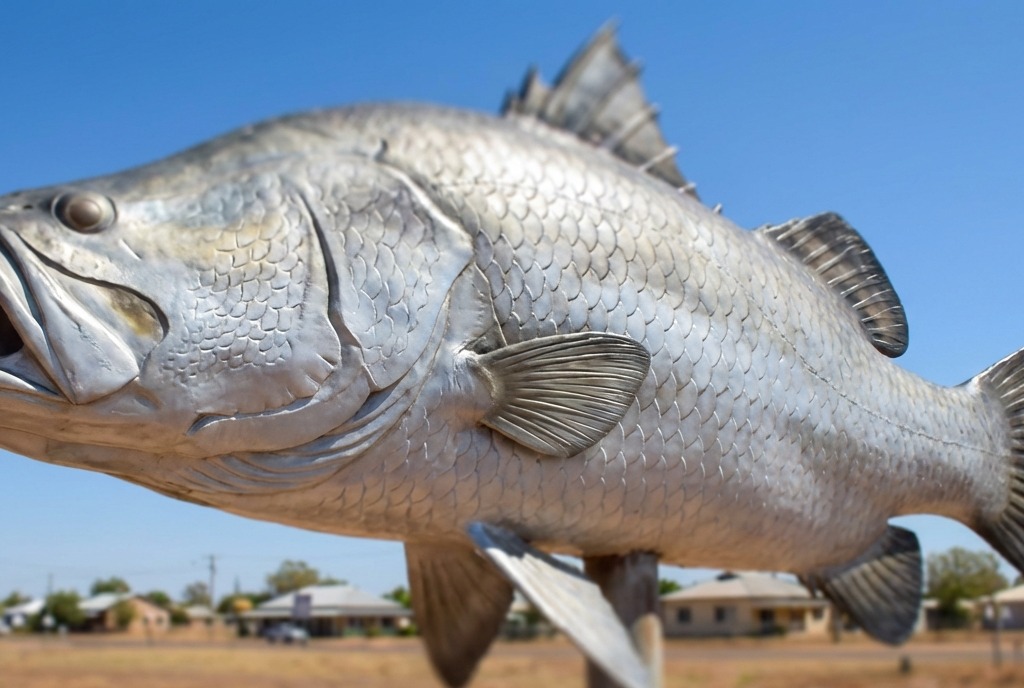
Big Barramundi
A 6-metre long fibreglass barramundi celebrating Normanton's status as the 'Barramundi Capital of Australia'.

Big Cow
A large cow sculpture located in Highfields, Queensland, celebrating the region's dairy farming heritage.
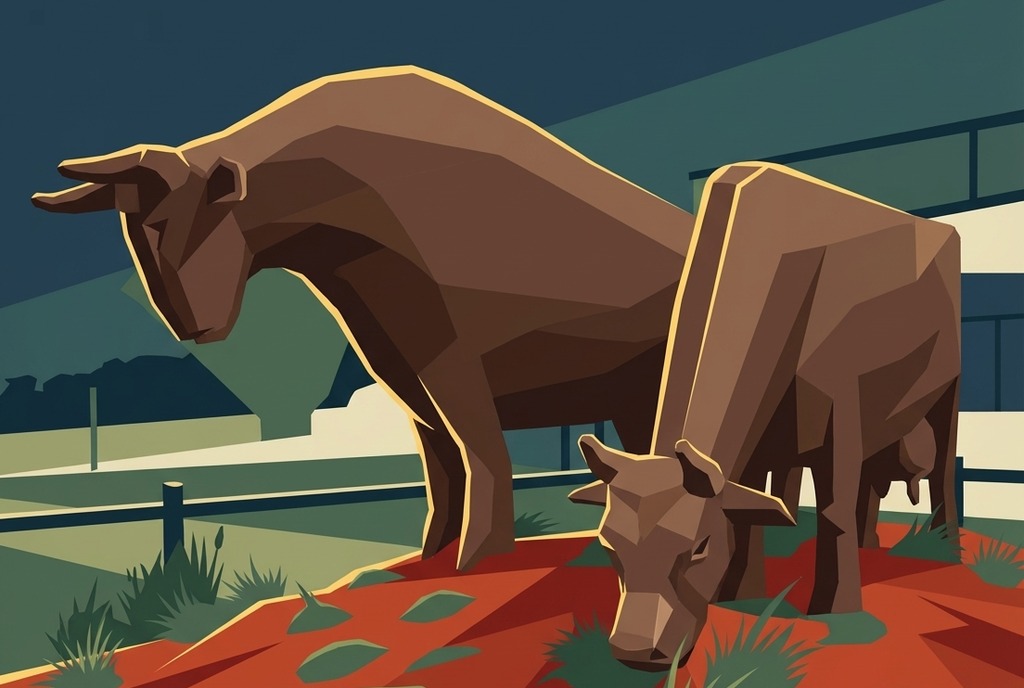
Big Cows
Big Cows in Newhaven is a group of large cow sculptures located in Newhaven on Phillip Island, Victoria, celebrating the island's agricultural heritage.